
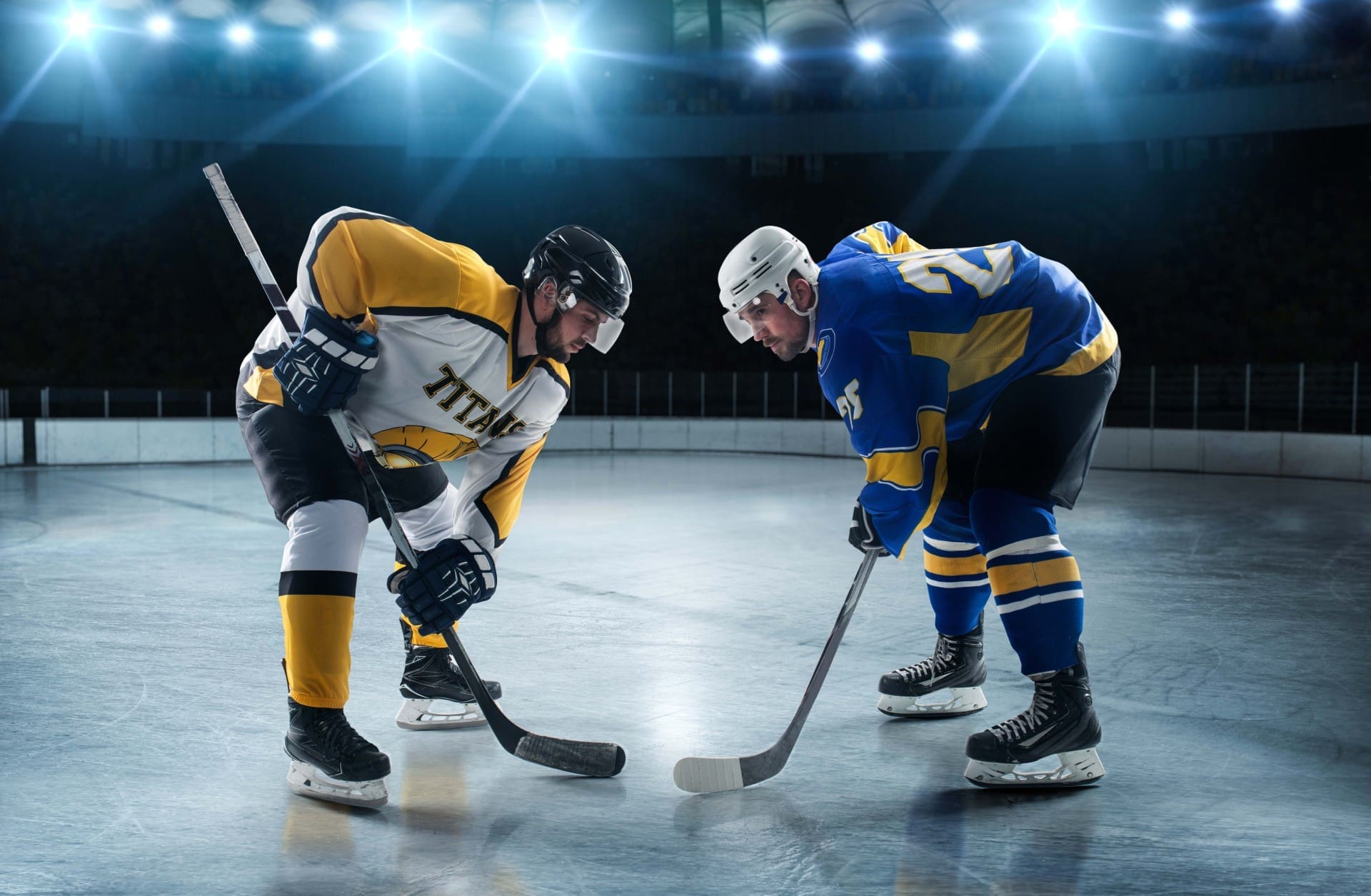
For decades, the National Hockey League was governed by an unwritten principle: it’s a battle of toughness. It’s simple, and the tougher teams are, the farther they go. The logic being that for a team to have space for their skilled players, they had to intimidate the opponents. However, the present-day game has changed considerably towards speed, skills, and puck possession.
As analytics departments are growing in front offices, the “Broad Street Bullies” mentality is in question. The information is growing and, for anyone asking what NHL team is the fight leader, pointing to the fact that time spent in the penalty box isn’t a badge of honour. It’s rather a direct detriment to the outcome of the game.
Measuring Aggression Against Success
To get the true worth of physical play, the analysts consider the highlights and data. They look at the raw penalty minutes and fighting majors. As much as fans cheer for heavyweight fights, the top standings don’t favour the most penalised teams. One has to ask which teams actually lead the league in fighting majors. This helps in knowing whether aggression leads to winning. Thereafter, they’ll be able to compare their positions in the playoff race.
The 2025-2026 season features the Boston Bruins and Columbus Blue Jackets. They’re home to the players who got the top positions in the league regarding penalty minutes. These athletes also lead the rankings in terms of fighting majors. An example is Nikita Zadorov of the Bruins, who had earned more than 119 penalty minutes by mid-season.
Although Boston is a competitive city, other leagues holding leading positions in the toughness ranks don’t qualify. For instance, in recent years, the Montreal Canadiens haven’t been part of the playoffs. This inconsistency disproves the classical scenario according to which fighting ensures protection or winning.
The Statistical Reality of PIMs and Points
When multivariate regression analysis is done by statisticians on seasons in the NHL, the situation becomes clear. The relationship between penalty minutes and percentage of points is also inversely related at all times. Research conducted on play over the past 50 years has discovered the correlation coefficient’s value. Between fights per game and earned points, it’s about -0.16.
On the one hand, the coefficient isn’t a huge number. However, it’s a negative number, which indicates that the more a team fights, the less it’s likely to win. The teams that perpetually hoist the Stanley Cup usually rank in the lower half in fighting majors. They’re clearly more oriented towards discipline than they are towards brawling.
Smart Aggression Versus Unfavourable States
Teams must understand the difference between “aggressive” and “penalties.” Hits, checking, and battling along the boards all positively correlate with winning. This is because they typically enable a team to regain possession. This type of behaviour is called “instrumental aggression”.
“Lazy penalties” (like stick violations, tripping, and hooking) put a team at a disadvantage. While hits may disrupt rhythm, taking a team’s best skater out for two minutes kills the team’s momentum. The best teams in the league lead the league in hits, but are often at the bottom in minor penalties.
The Momentum Myth
The most popular excuse offered in favour of fighting, however, is the theory of “momentum.” Everyone, from fans to broadcasters, cites fighting as a way to get a team to turn the tide and play harder. The result doesn’t show up in the game logs, though.
Analysis of game logs split into segments reveals no evidence that teams starting fights score more. They don’t score frequently in the subsequent 10 minutes when behind. If anything, fighting tends to break up line rotations and make a team become disjointed. It’s due to the loss of a player for 5 minutes.
The Power Play Opportunity Cost
The price of a penalty is calculable mathematically. Analytics models indicate that one minor penalty would cost a team between -0.17 and -0.42 goals. These numbers are based on the efficiency of an opponent’s power play.
When the average power plays in a league rest between 20 and 25%, a team makes three unwarranted minor penalties. That team is statistically giving away almost a goal to its opponent. This disciplinary lapse over an 82-game season can be the difference between gaining home-ice advantage and failing to make the playoffs at all.
The Penalty Box Paradox
The spectacle of a fight remains a part of the value for entertainment within hockey today. It’s no longer a worthwhile strategy for securing points in the standings. The information for the 2025-2026 season and beyond bears out the fact that the most dangerous team isn’t throwing punches. Instead, the real threat is the one hanging around the ice, scoring goals.
Championship contenders today focus on the efficiency of the penalty kill and disciplined play. The NHL today shows that the team that stays out of the box wins the Cup, proving that pugilism costs losses.


