
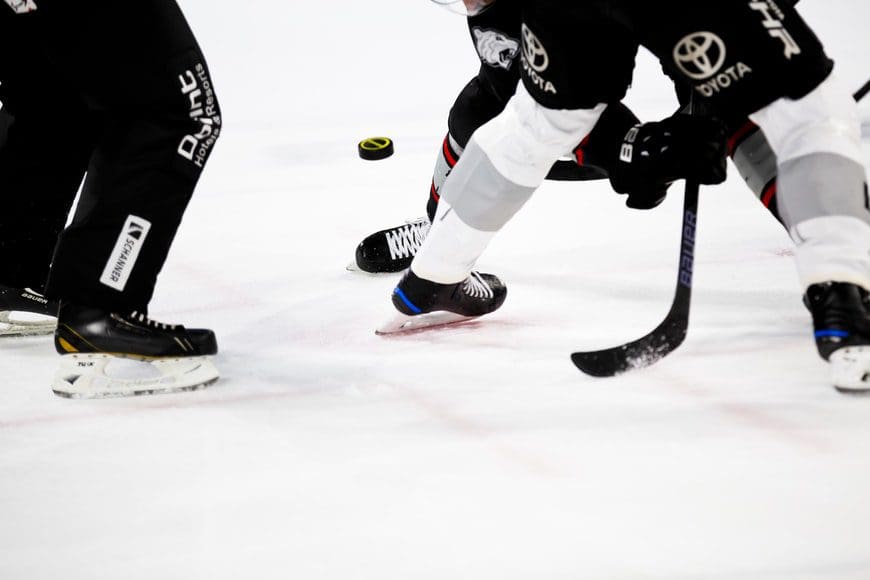
Although drastically different in nature, poker and ice hockey require extraordinary mastery and a similar set of skills. This is probably why Greg Mueller, Phil Kessel, Roberto Luongo and other hockey athletes managed to succeed in both fields.
One moment, you are a proactive player on the ice and boom, you turn into a calm punter on the top UK poker sites and at live tables. Watching this transition is a true delight.
In this post, we discover how similar the set of abilities required for these two exciting sports is.
Reading Game and Opponents
Ice hockey is all about making the right move. Except for understanding the rules, own position, and role, everyone on the field has a so-called hockey IQ. Making shots at the right moment and defending one’s own net is what good players do. But the great ones look ahead. The skill of reading the game encompasses a set of smaller abilities:
- to understand the opponents’ patterns;
- to predict where the puck will be;
- to identify the style of each player;
- to think several moves ahead.
This is what helped Dominik Hašek turn the underdog Czech team into a winner at the 1998 Nagano Winter Olympics. He was the joker who beat all of the opponents’ aces. Thanks to the reading game and opponents, he tricked the Canadian team, intentionally leaving the net open. He moved to the open spot even before the opponents shot and stopped 5 shots this way. This is what is called a “mental game.”
How This Works for Poker Players
Reading opponents at the poker table is a must-have skill. To succeed in the game, you need to study how your rivals behave and notice changes in their betting tendencies. A creaky voice, prolonged staring, a subtle twitch of the eye and even the slightest hint of a smile can be a clear tell to a strong or weak hand. One’s comfort or discomfort with their cards, to be exact.
So it is also important to master deceptive cues to mislead your opponent. Similarly to what Dominik Hašek did in Nagano and other competitions.
Patience and Resilience
Rushed decisions are likely to lead the hockey team to failure. Rushing in the game when it’s not necessary may lead to turnovers and penalties. In contrast, patient hockey players are often rewarded with extra scoring chances.
The game is moving at breakneck speed, so even waiting a second may open up a passing/shooting lane that wasn’t there before. If you know how to hang on and protect the puck on the ice, this means your teammates get more time to get open. This needs a high level of patience.
Thanks to resilience, players do better positioning, make steady progress, and perform timed actions. Resilient hockey players keep looking forward; they do not dwell on past setbacks. Struggles turn into lessons and chances to grow as a professional. Future challenges do not scare them. Future challenges motivate them do better.
How This Works for Poker Players
Similar to ice hockey, there’s no room for impulsive play at the poker table. The more patient and calm you are, the closer you are to success. A losing hand shouldn’t be a dismay, as opponents will quickly read your body language.
Folding if your hand isn’t the best is a good way to study the opponents and wait for a better moment. It all becomes possible with patience.
Strategic Oversight
Without a properly built strategy, team members can’t coordinate each movement on the field and avoid chaos. Coaches apply strategic oversight to adapt the style of play to what’s happening on the field. Instead of sticking to one plan, athletes and the coach have to develop agility and be able to switch to a new strategy in seconds.
In the context of ice hockey, strategy is a comprehensive term with multiple branches. See what aspects it usually covers:
- Predicting and managing risks.
- Swift transitions of play style.
- Achieving team goals.
- Proper identification of players’ roles.
Coaches and athletes spend countless hours adjusting strategies based on the last games. They devise tactics and study playbooks – this ensures the team is prepared for different scenarios and can quickly adapt to unexpected twists on the ice.
How This Works for Poker Players
Strategy is what distinguishes poker from other card games. It’s the lifeblood. It’s the blueprint for achieving victory. There’s no way to use it for getting a better hand at dealing, but it’s possible to understand the chances of winning with a particular hand in a specific position. Similar to hockey play.
Strategy in poker is built on a blend of skills. With agility, players can adjust their style and plans with each next card dealt on the flop, turn, or river.
How Pros Master the Game Off-Field?
With so many similarities in mental abilities, it seems interesting to compare how hockey athletes and poker grinders study beyond the action. Analysing hands is the basis for any poker player, even for an amateur. Sharks (experienced ones) use Flopzilla and other software to calculate the chances of winning for each hand and enter hand ranges. They study and remember.
Thanks to the smooth integration with GTO solvers, players can learn the best strategy for the hand they enter. Young hockey players do something similar to refine their mastery.
Watching the high-level hockey games is among the basic studying strategies. While analysing the records, athletes pay attention to positioning nuances, each player’s role, their movements, etc. A detailed analysis helps to understand the team’s strategy and define how each player contributes to achieving it.
Calculations, strategy-building, and strong analytical skills are the forces that move poker chips and a hockey puck. Both activities are mental games first, so no wonder Kessel became the WPT Global brand ambassador after being a 3-time Stanley Cup champion. The shared abilities of poker grinders and hockey athletes show these switches aren’t occasional.


